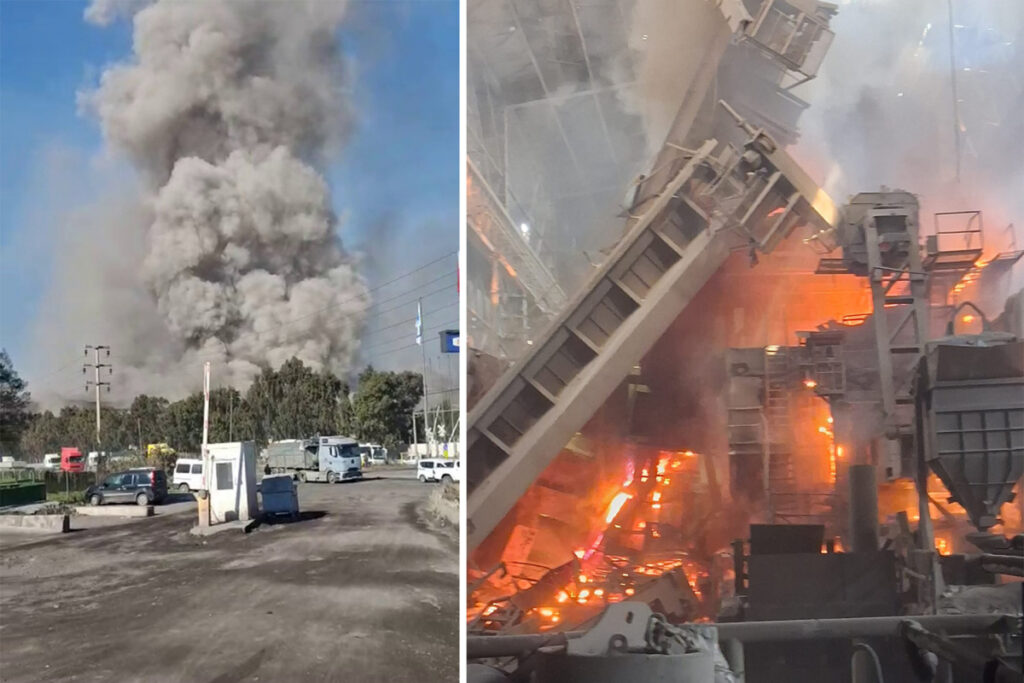
At least 19 workers have lost their lives following an explosion at a steel factory owned by HABAŞ, one of Turkey’s major industrial companies, in the Aliağa district of İzmir.
The explosion occurred on 9 November during maintenance work at the factory. An overhead crane reportedly collapsed during the replacement of a boiler, causing materials to fall into an electric arc furnace and triggering an explosion and fire.
Several workers were seriously injured, and the death toll rose to 19 as injured workers died in hospital.
The disaster has raised serious concerns about workplace safety. According to the company’s own reports, workplace accidents resulting in lost working time increased from 147 in 2024 to 229 in 2025, while reported occupational health and safety training hours fell by approximately 87%.
Workers have described unsafe working conditions and fears of losing their jobs if they raised concerns. Some said they were called back to work the day after the explosion.
Turkish authorities have launched a criminal investigation. Nine suspects have been remanded in custody, while the company’s chairman, Mehmet Rüştü Başaran, has been placed under house arrest. Criminal responsibility has not yet been established.
Trade unions and labour organisations have demanded accountability, arguing that workers continue to pay with their lives for inadequate safety measures in Turkey’s industrial workplaces.
The tragedy has renewed a fundamental question about the relationship between profit and workers’ safety: Why are workers still dying while producing the wealth of major industrial companies?