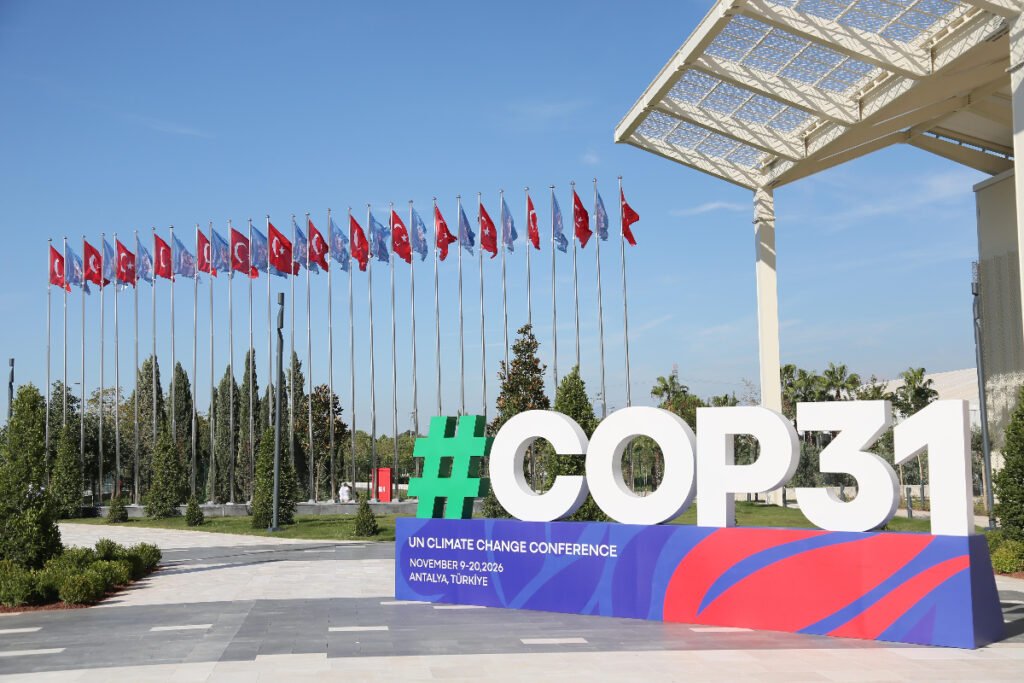
World leaders and corporate executives have gathered in Antalya, Turkey, for the COP31 climate summit. Yet after three decades of international climate conferences, global emissions continue to rise. Are these summits delivering real change, or protecting an economic system built on endless growth and corporate profit?
From 9 to 20 November, governments, international organisations and major corporations are meeting in Antalya to discuss the future of our planet.
But the history of these conferences raises uncomfortable questions.
Since the first UN climate summit in 1995, atmospheric CO₂ concentrations have increased by approximately 18%. Despite the 2015 Paris Agreement and repeated promises to limit global warming to 1.5°C, current policies still put the world on course for approximately 2.8°C of warming this century.
Global energy-related CO₂ emissions reached another record high in 2025. Renewable energy has expanded significantly, yet worldwide demand for oil, coal and natural gas continues to grow.
Among COP31’s corporate participants and supporters are companies associated with fossil fuels, mining and environmentally controversial projects.
While governments promote “green growth” environmental campaigners question whether the same economic priorities responsible for ecological destruction can genuinely address the crisis.
The contradiction goes beyond climate policy. Under a global economy driven by competition, private ownership and profit, environmental protection repeatedly comes into conflict with commercial interests.
For working people, including millions across Britain, climate change is not an abstract political debate. It affects energy bills, food prices, housing, employment and public health.
Yet those who contribute least to the crisis often have the fewest resources to protect themselves.
An alternative People’s Climate Summit, taking place in Antalya from 14 to 18 November, aims to bring together trade unions, farmers, environmental organisations and grassroots movements demanding climate justice and greater public control over energy and resources.
After thirty years of negotiations, the question is no longer simply whether governments recognise climate change. It is whether meaningful environmental protection is possible while corporate profits and economic growth remain the dominant priorities.