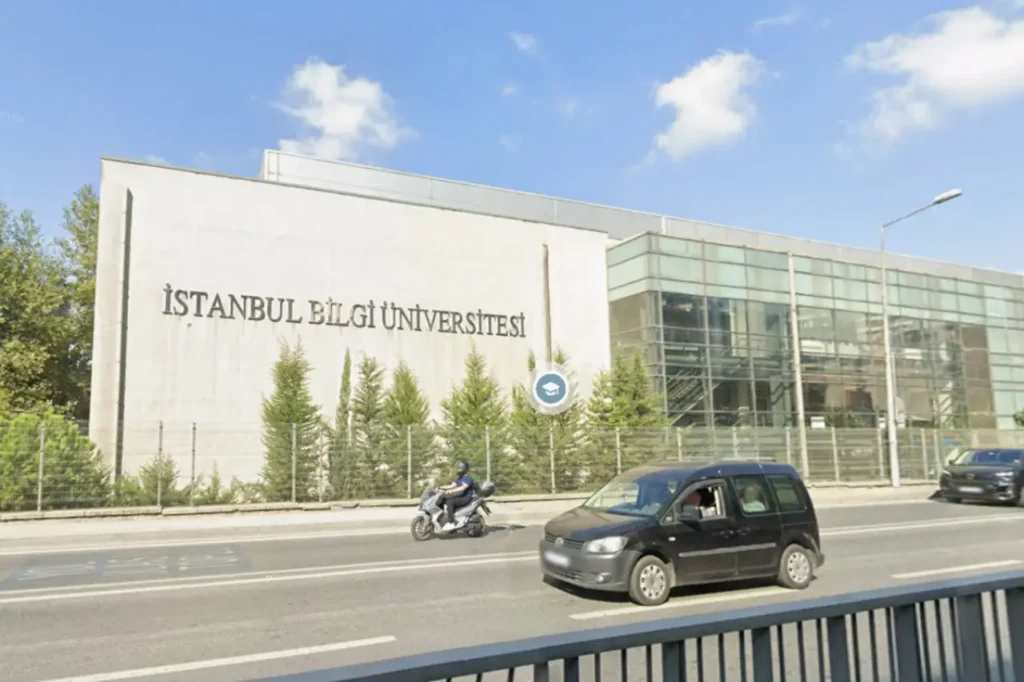
The decision to close İstanbul Bilgi University by presidential decree has triggered widespread outrage among trade unions, human rights organisations, students, and academics across Turkey. The move represents a direct attack on academic freedom, democratic rights, and the right to education, while placing tens of thousands of students and university workers into deep uncertainty.
Education unions and rights groups argue that the closure is not an isolated administrative decision, but part of a broader authoritarian and neoliberal restructuring of higher education in Turkey, i.e. one that treats universities as commercial enterprises rather than public institutions dedicated to knowledge, critical thought, and social progress.
In a strongly worded statement, Eğitim Sen condemned the closure and warned that more than 20,000 students now face uncertainty over their education, diplomas, and future prospects. Thousands of academic and administrative staff are also at risk of losing their jobs and livelihoods.
The union stated that students have been left asking: “What will happen to our diplomas? What future awaits us?” while university workers fear unemployment and the loss of basic job security.
Eğitim Sen argued that universities should not be treated as profit-driven businesses or investment opportunities for politically connected elites. Instead, they stressed that universities are public institutions that belong to society as a whole and must remain spaces for free scientific inquiry, democratic participation, and collective learning.
The union also denounced the use of a presidential decree to close a university established by law, describing the move as unconstitutional and a dangerous concentration of power in the hands of the executive. According to the statement, the decision reflects an attempt to subordinate academia entirely to political control and market interests.
The Human Rights Association (İHD) Istanbul Branch Youth Commission also condemned the closure, warning that it would have serious consequences for the right to education, the right to work, and academic freedoms.
The commission highlighted that İstanbul Bilgi University became part of Can Holding in 2019, and that state intervention followed investigations into the company. However, they stressed that students, academics, and university employees should not be punished for developments connected to corporate management or government investigations.
While authorities have indicated that students and archives may be transferred to Mimar Sinan Fine Arts University as the designated guarantor institution, there are no equivalent guarantees for university workers. Hundreds of employees could therefore face unemployment without protection or compensation.
İHD also warned that the closure would damage important academic work in the fields of human rights, democratisation, freedom of expression, and anti-discrimination studies (all areas in which Bilgi University had become one of the few institutions in Turkey offering advanced academic programmes).
Their statement emphasised that universities are living public spaces where knowledge is produced collectively and where students, academics, administrative staff, workers, and wider communities build social life together.
The closure of İstanbul Bilgi University comes amid growing concerns over increasing political interference in Turkish universities, attacks on trade union rights, and the erosion of institutional autonomy. The issue extends far beyond a single university. It raises urgent questions about the future of democratic education, freedom of expression, and labour rights in Turkey.
Students and university workers should not bear the consequences of political decisions made behind closed doors. The right to education, secure employment, and academic freedom must be defended.
The campaign for solidarity with the people of Turkey stands with the students, academics, administrative staff, and workers affected by this decision, and supports the struggle for free, democratic, autonomous, and public education.